Why Do Reading Habits Decide a Nation’s Future?
Quick Answer
Reading habits are the daily practice of reading books, articles, and stories to learn and enjoy. A nation with strong reading habits builds sharper minds, better workers, and wiser citizens. Over time, these small daily habits shape jobs, growth, and the health of a country’s future. Recent data shows why this matters right now.
Every strong nation shares one quiet habit. Its people read. They read at home, in schools, on buses, and before sleep. This habit looks small. Yet it decides how a country thinks, works, and grows.
Many people believe that money and machines build a nation. These things matter. But money runs out and machines grow old. A reading mind does not. It keeps learning, solving, and improving for a whole lifetime. That is why reading sits at the base of every lasting success story.
Reading is how a person collects the ideas of the whole world. One book can carry the lessons of many years into a single evening. When millions of people read, a nation collects millions of ideas. This shared store of knowledge is real national wealth, and no one can take it away.
Between 2026 and 2030, this truth will matter even more. Machines now write, draw, and answer questions in seconds. In this new world, the people who read, think, and judge well will lead. The people who only scroll will slowly fall behind, even if they own the same phones and tools.
This article explains why reading habits decide a nation’s future, what is happening to reading today, and how a country can build a stronger reading culture by 2030.
What does a “reading habit” actually mean for a country?
A reading habit is not one big act. It is a small action a person repeats every day. Ten pages each night can add up to many books each year. A country’s reading habit is simply the sum of these small daily actions across all its people. When you add up millions of small habits, you get a national force that shapes how the whole country learns and thinks.
Habits also grow stronger with time. The more a person reads, the easier reading becomes, and the more they want to read. This is a positive loop. A nation that starts this loop early, in its schools and homes, gains a reading habit that feeds itself for generations. A nation that ignores it must fight much harder to build the same habit later.
Reading habit versus literacy: why they are not the same
Many people mix up literacy and reading habits, but they are not the same. Literacy means a person can read words. A reading habit means a person chooses to read often. A country can have high literacy and still read very little. This gap is a hidden risk. People who can read but rarely do slowly lose the skill and the patience that deep reading builds. So a nation must track not only who can read, but who actually reads.
How daily reading builds thinking, focus, and judgment
Reading trains the mind in a way that fast media cannot. A book asks the reader to hold ideas, follow an argument, and wait for the point. This builds focus and patience. Over time, a regular reader learns to weigh facts, spot weak logic, and reach clear judgments. A nation full of such minds makes better choices in work, business, and public life. These skills also protect people from quick tricks and false promises.
How do reading habits shape a nation’s economy?
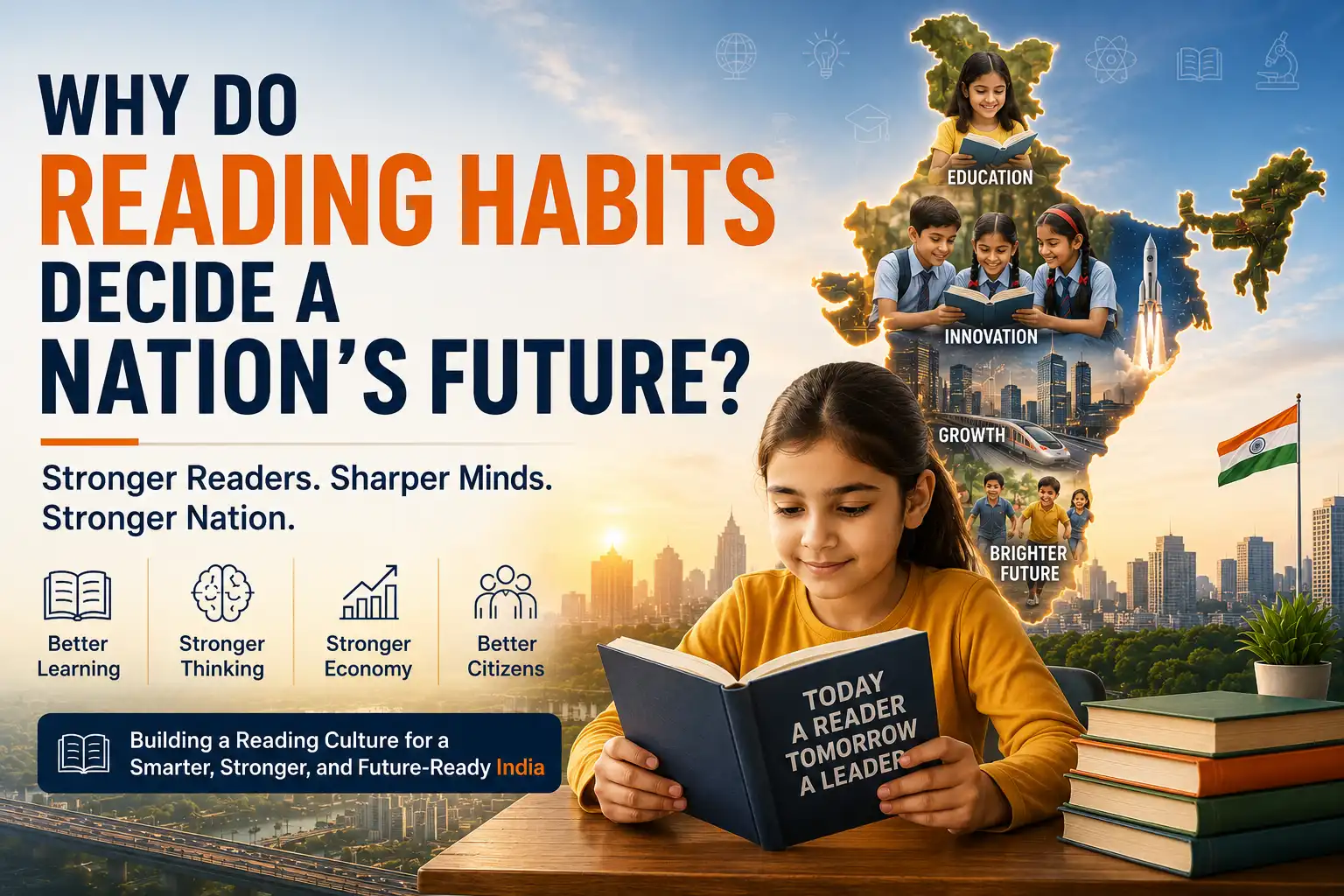
A country’s economy runs on skills, and most high skills start with reading. The link is a simple chain. Reading builds thinkers. Thinkers build companies. Companies create jobs. Jobs strengthen the economy. And a strong economy shapes the future of the whole nation. Reading sits at the very start of this chain, which is why it matters so much.
Reading, skills, and a job-ready workforce
Modern jobs ask workers to learn fast and often. New tools arrive every year, so workers must read manuals, reports, and guides to keep up. A person with a strong reading habit learns these new skills with ease. A person who avoids reading struggles and falls behind. When most workers read well, the whole nation adapts faster to change and holds its place in a tough global market.
Think of a young farmer who reads about a new way to save water. In one season, that reading can lift the whole harvest. Now imagine millions of such small wins across a country. This is how a simple reading habit turns into real income for families and real strength for a nation.
Why reading nations produce more innovation
New ideas rarely come from nothing. They come from mixing old ideas in fresh ways. Readers carry many ideas in their heads, so they connect them more easily. This is how reading quietly drives a knowledge economy. Over time, strong reading habits feed research, invention, and new business. They raise scientific thinking and entrepreneurship, and they even support patent creation and wiser public policy. The World Bank’s Learning Poverty research points to the risk at the base of all this. When children cannot read well, they cannot learn these deeper subjects either, and a nation’s growth slows for years.
Why do reading habits protect democracy and better decisions?
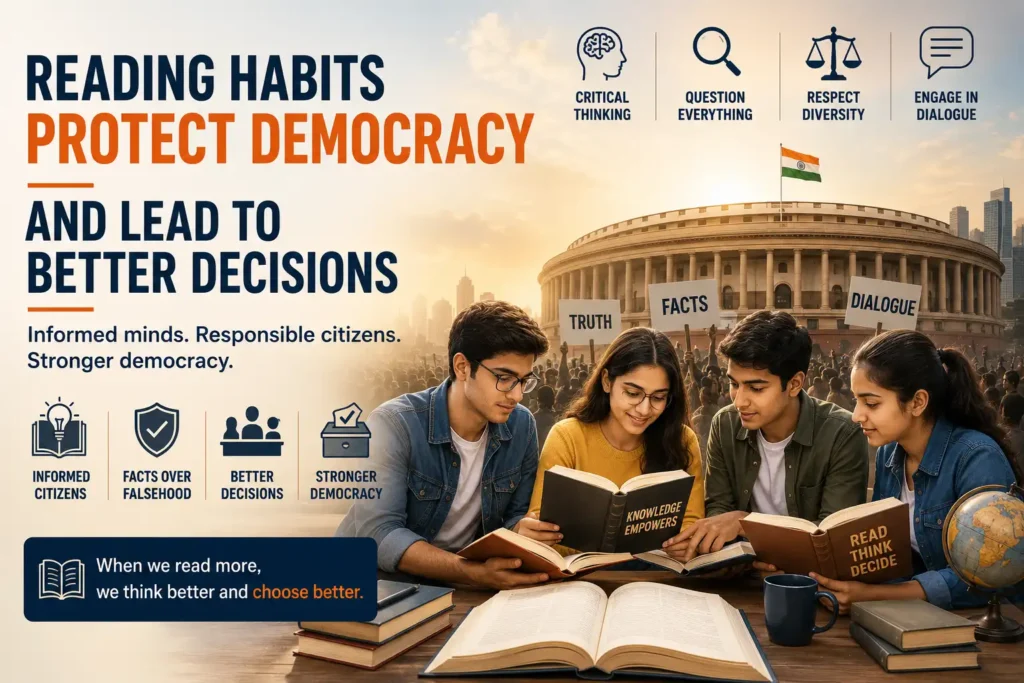
A nation is more than its economy. It is also its people and the choices they share. Reading protects the quality of those choices, which keeps a country steady in hard times.
Informed citizens and the fight against false news
Today, false news spreads faster than truth. A person who reads widely can check a claim, compare sources, and think before reacting. A person who only reads short posts is easier to fool. This skill of judging sources is a core part of information literacy. When many citizens read deeply, a nation resists lies and panic. This keeps public debate calm, fair, and honest, which is the heart of a healthy democracy.
Rumours can also cause real harm. A single false message can spark fear, panic buying, or even violence. A reading public pauses, checks the facts, and stays calm. In this way, a strong reading habit acts like a shield that protects a nation during tense and difficult moments.
How reading builds empathy and social trust
Stories let a reader live inside another person’s life for a while. A reader feels the fear, hope, and struggle of people very different from them. This slowly builds empathy. A nation of empathetic people trusts more, fights less, and solves problems together. Trust is quiet, but it holds a country together when times get hard.
What is happening to reading habits in 2026?
The picture in 2026 is mixed. More people can read than ever before. Yet fewer people read deeply. Screens now fill the small gaps in the day that books once filled, and this shift is changing how minds work.
The screen versus book problem
Phones live inside an attention economy. They are built to grab attention and give quick rewards, so the brain starts to crave fast, short content. Long reading feels slow next to this. Many children now find it hard to sit with one book for even ten minutes. This is not a fault in the child. It is the result of daily screen habits that crowd out reading, one swipe at a time.
Picture a simple moment. A child picks up a phone to check one message and loses an hour to short videos. That lost hour was once reading time. Multiply this across a whole country, day after day, and a nation quietly loses years of learning without even noticing.
Current data and where it points by 2030
The warning signs are clear. The OECD PISA study has reported that reading scores fell in many countries in its recent rounds. In India, the ASER survey has long shown that many children in higher grades still cannot read simple texts meant for lower grades. If these trends hold, by 2030 many nations will split into two groups: people who read and think, and people who only scroll. This gap will decide who leads and who lags.
Why will reading matter more between 2026 and 2030?
Some people think that smart machines make reading less important. The opposite is true. As machines do more of the easy work, human reading becomes the skill that sets people apart.
Why AI raises the value of a reading mind
AI can write, answer, and create in seconds. But AI gives information, not wisdom. It does not know which answer fits your life, your values, or your moment. Only a trained human mind can judge that. Deep reading builds exactly this judgment. So a reader does not compete with the machine. A reader guides it.
This is the key difference for the years ahead. AI gives information. Readers create wisdom. A nation of strong readers will use these new tools with care and skill. A nation of weak readers will simply believe whatever the machine says. That single difference will help decide which countries lead in the age of AI.
How can a nation build stronger reading habits by 2030?
The good news is simple. Reading habits can be built. They grow when reading becomes easy, social, and part of daily life. A few clear steps can shift a whole nation within a few years.
Schools, libraries, and mother tongue reading
Reading grows fastest when it starts early and in a child’s own language. Schools should give time for free reading, not just textbooks. Libraries should sit close to where people live. When a child can borrow a fun book in their mother tongue, reading stops feeling like work and starts feeling like play. Joy is what turns a one-time reader into a lifelong one.
Families and daily reading routines
Children copy what they see at home. When parents read, children read. A fixed reading time, even fifteen minutes before sleep, can build a lifelong habit. Families do not need many books. They need one steady routine and a few good stories. Over the years, that small routine can shape a whole future.
Small signs help too. A shelf of books at eye level, a library card for each child, or a weekly trip to borrow new stories keeps the habit alive. What a child sees every day soon becomes what a child values. So the home is the first and most powerful reading school a nation has.
Using new technology to support reading, not replace it
Technology does not have to be the enemy of reading. Used well, it can help a great deal. E readers, audiobooks, and simple reading apps can bring books to places that have no library nearby. Smart tools can suggest the right book for each reader and send a gentle reminder to read each day. The goal for 2026 to 2030 is clear. A nation should use its new tools to build reading habits, not to break them.
The role of mentors and reading movements
Habits grow faster with a guide. A mentor helps a person pick the right book, stay regular, and connect reading to real life. This is why reading coaches and reading movements now matter so much. They turn reading from a lonely task into a shared journey. One such movement in India shows how this can work at a national scale.
What role do books and reading movements play in national growth?
Books are tools. Movements and mentors are the hands that put those tools to work. Together, they can slowly turn a weak reading culture into a strong reading ecosystem.
Reading movements and a stronger reading culture
Around the world, and in India too, communities are working to rebuild a reading culture. Families, schools, libraries, and book clubs are joining hands to bring back the daily reading habit. Bharat Padho Abhiyan is one such initiative. It promotes daily reading through structured programs for parents, schools, libraries, and book clubs. Efforts like these show how a nation can rebuild lifelong reading from the ground up.
The thinking behind a reading movement
Behind many reading movements stand guides who have walked the path. Reeta Ramamurthy Gupta, Asia’s First Reading Coach, author, biographer, and columnist, has spent years encouraging children, parents, educators, and professionals to build lasting reading habits. Her work reflects a simple belief. Stronger readers become stronger thinkers, and stronger thinkers help build stronger nations. That belief sits at the heart of this whole argument. A nation does not rise only through money or machines. It rises through minds, and reading is how strong minds are made.
Frequently Asked Questions
Why are reading habits important for a country’s future?
Reading habits build the skills, judgment, and empathy that a nation needs to grow. People who read often learn faster, work better, and make wiser choices. Over many years, these small daily habits shape a country’s economy, its democracy, and its power to face new challenges. In short, a reading nation is a future ready nation.
How do reading habits affect a nation’s economy?
Most high skills begin with reading. Workers who read can learn new tools and ideas quickly, which keeps a nation competitive. Reading also fuels new ideas and inventions in a knowledge economy. When children cannot read well, they struggle to learn other subjects, which slows national growth for years.
Do reading habits improve decision-making and democracy?
Yes. Readers can check facts, compare sources, and think before they react, which helps them resist false news. Reading stories also builds empathy, which raises trust between people. A nation with many thoughtful readers makes calmer and fairer public choices, so its democracy stays strong.
Are reading habits declining in 2026?
In many places, deep reading is falling even as basic literacy rises. Screens now fill the small gaps that books once filled. Studies such as OECD PISA have reported falling reading scores in many countries, which is a clear warning sign for the years ahead.
How can a country build better reading habits by 2030?
A country can build reading habits by making reading easy, social, and daily. Schools should give time for free reading, libraries should sit close to homes, and families should keep a fixed reading time. Reading movements and mentors also help by guiding readers and keeping them regular, so the habit sticks for life.
What is the best way to start a daily reading habit?
Start small and stay steady. Pick a book you enjoy, choose a fixed time, and read just ten pages a day. Keep the book where you can see it. Join a reading group or a campaign for support and encouragement. Small daily steps beat rare long sessions every single time.
Comments are closed